Navigation
Coastal routes and timing
Before electronic guidance, keepers synchronized light patterns with charts and tide knowledge. Distinct flash intervals helped captains identify specific headlands in fog or nighttime approach.
Keepers
Labor, routine, and watch
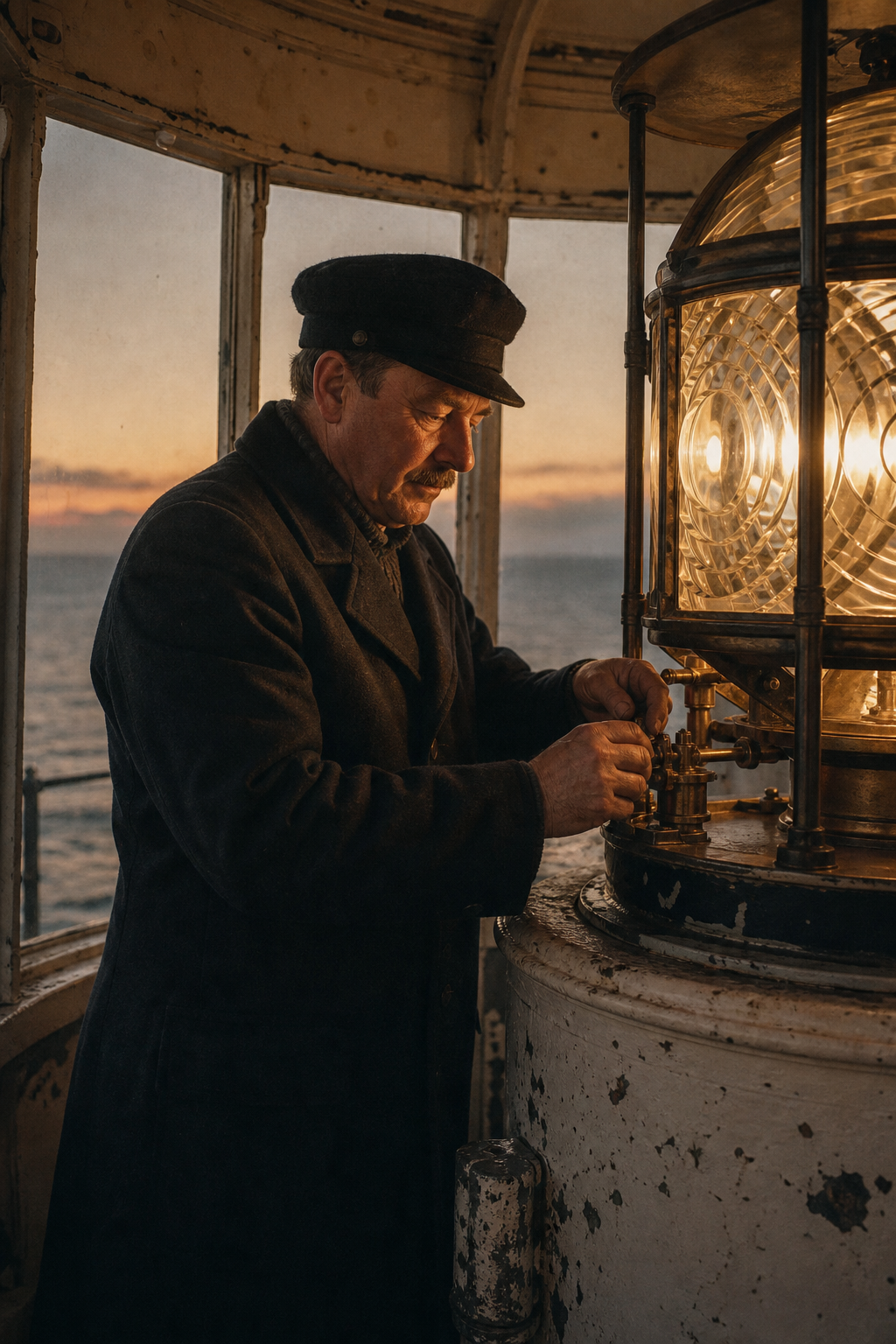
Keeper logs describe long maintenance cycles: polishing lenses, trimming wicks, measuring weather, and signaling nearby stations. Families often shared this work, turning isolated towers into small working households.
“When the bell buoy disappeared in mist, the tower’s light was our only line between shore memory and open water.”
Harbor notebook, northern district archive, 1912
Preservation
From utility to heritage
As automation reduced staffing, many structures risked neglect. Local preservation groups documented masonry, optics, and oral histories, allowing restored towers to remain active reference points in regional coastal memory.